
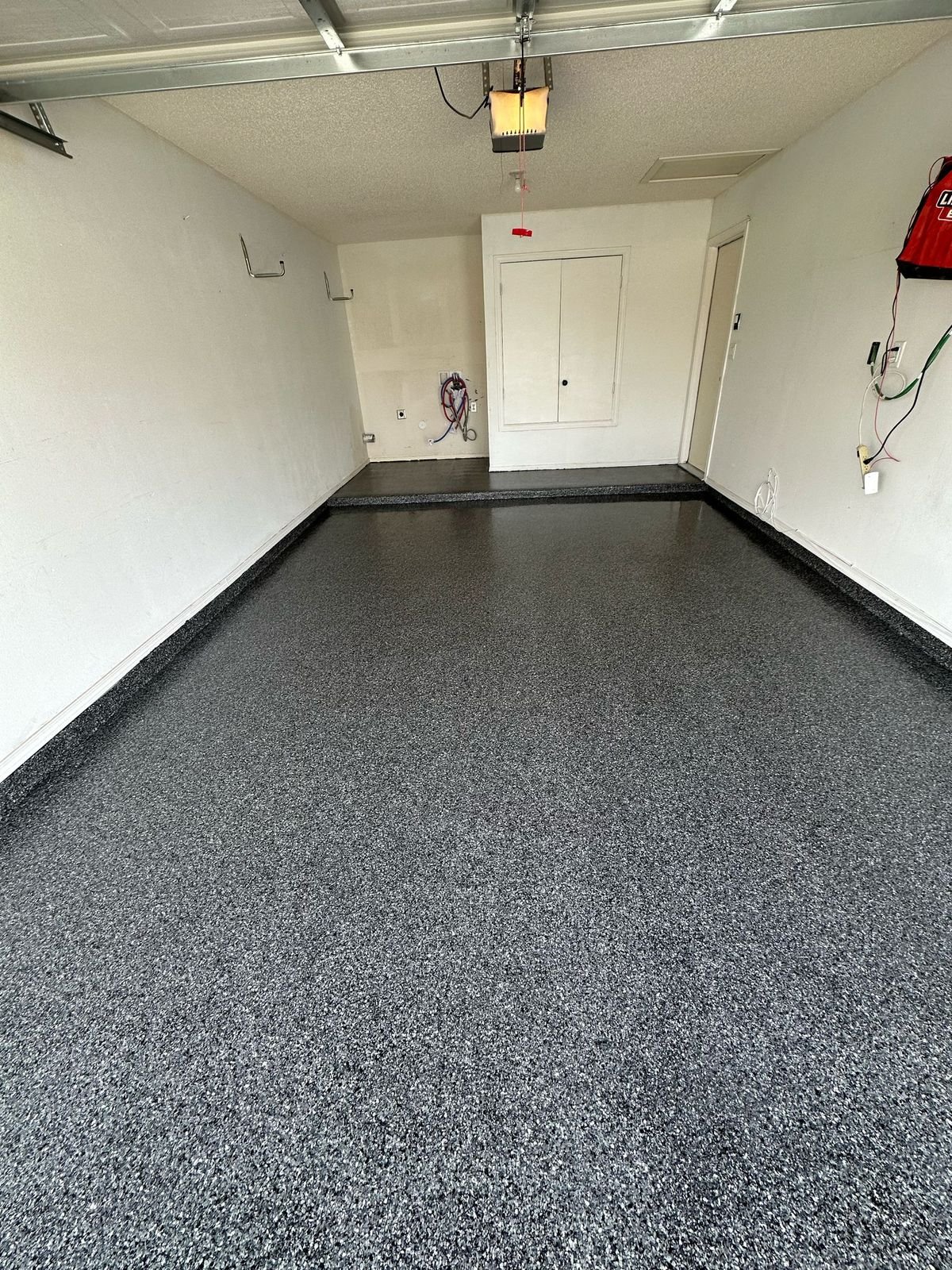
Epoxy Garage Floor Warranty in El Paso: What It Covers
What an epoxy garage floor warranty actually covers
An epoxy garage floor warranty, in most cases, covers one thing: the coating losing its bond to the concrete (peeling, delamination, or bubbling) when the failure is the installer’s fault. That’s it. It almost never covers scratches, chemical stains, hot-tire marks, cracks that open up in the slab, or moisture pushing up from underneath. And “lifetime” rarely means what you think it means.
So if one of your two bids says lifetime warranty in big letters, the right question isn’t “how long?” It’s “what’s covered, what’s excluded, whose life, and is it in writing?” A five-year warranty with plain exclusions beats a lifetime warranty with fine print that hands every failure back to you. Epoxee has read plenty of competitor warranty sheets that El Paso customers bring us. Here’s how to read one.
What does a lifetime garage floor warranty cover in El Paso?
The word lifetime is slippery. The FTC’s Businessperson’s Guide to Federal Warranty Law says “lifetime” gets used in at least three different ways: the life of the thing it’s installed on (the guide’s example is a muffler and the car it’s on), which passes to the next owner; as long as the original buyer owns it, which the guide calls a common but “inaccurate application of the term”; or as long as the original buyer is alive, which it says is probably the least common. The FTC’s advice is that the ad should tell you which “life” it means.
One caveat: that guide covers consumer products under federal warranty law, and an installed floor is partly a service. Treat it as the FTC’s guidance on how the word should be used, and use those definitions as your yardstick. When a bid says lifetime and doesn’t define it, ask. In our experience the answer is usually “as long as you own the home,” which is a real warranty. It’s shorter than the word makes it sound.
Second thing to check: a lifetime warranty garage floor coating is only as good as the company behind it. A homeowner on Garage Journal described a franchise quote where the owner said the lifetime guaranty stayed backed by the national company even if the local franchise closed. A local crew like Epoxee can’t offer a national backstop. What we can offer is the owner’s phone number and a written term we intend to honor.
Manufacturer warranty vs installer warranty
Some bids lean on the manufacturer’s warranty. Here’s the limited warranty from the technical data sheet for Deco-Crete’s Polyaspartic 90 Standard Set topcoat: the company warrants its products “to be free of manufacturing defects” and its “sole responsibility shall be to replace the portion of any product proved to be defective.” Then the exclusions: no warranty “pertaining to appearance, color, fading, chalking, staining, shrinkage, peeling, normal wear and tear or improper application by the applicator.” Damage from abuse, neglect, lack of maintenance, acts of nature, and “physical movement of the substrate or structural defects” is out too.
Peeling is excluded. Improper application is excluded. And the remedy is replacing the material in the bucket, not the labor to grind your floor and redo it.
That’s not a knock on the manufacturer. It’s the correct scope for a product warranty. But it means the manufacturer’s name on a bid is not your protection. The installer’s warranty is the only one that covers what actually fails, which is the bond between coating and concrete. That same data sheet spells out a proper install: a ground surface profile of CSP 2 or above, moisture testing, slab moisture at 5% or lower, and 7 days before vehicle traffic. Skip those steps and the manufacturer has already excluded the result.
What voids an epoxy floor warranty?
An installer in a 2017 Garage Journal warranty thread put it bluntly: companies blame all peeling on moisture or the concrete and won’t cover scratches or chemical spills. A coatings vendor replying in the same thread said not to hang your hat on a warranty at all, because the fine print excludes the installer from almost everything.
Any honest installer will exclude slab movement and structural cracking, moisture vapor drive from a slab with no vapor barrier, chemical spills left to sit, and damage from dragging or dropping heavy equipment. Here’s why each one is on the list:
- Slab movement and structural cracking. El Paso sits on caliche and expansive soils, and slabs move. A coating is a few mils thick; it can’t hold a cracking slab together. No coating warranty covers this.
- Moisture vapor drive. If your slab tested dry on install day and a monsoon season later pushes water up through a slab with no vapor barrier, that failure started under the slab, and the coating was never in a position to stop it. More on that in our post about coating new concrete.
- Chemical spills left to sit. Brake fluid and battery acid will etch a topcoat if they sit for days. Wiped up the same weekend, they usually won’t.
- Dragging or dropping heavy equipment. A floor jack rolling across flake is fine. A transmission dropped off a bench is a gouge, and that one’s on you.
Now the El Paso-specific ones. Hot-tire pickup, where the coating lifts under the tires after a drive on 100°F-plus pavement, is the number one failure we see on other people’s work, and some warranty sheets exclude it. Bad prep causes that, and a good warranty should cover it. The mechanics are in our post on why epoxy peels and how to fix it. UV yellowing is the other one: with 300-plus days of sun here, a straight epoxy topcoat near an open door will amber. Most warranties exclude color change, which is why we finish with polyaspartic and not more epoxy.
And the oldest way to void a warranty: never having one. A homeowner on Garage Journal paid a pro, watched the floor fail under the tire paths after about three winters, and had only a verbal five-year warranty. A reply in that thread said it plainly: without a written agreement, nobody can judge it.
Is a garage floor warranty transferable?
Usually not, and the bids rarely say so. Only a warranty tied to the life of the floor itself carries over to the next owner.
Go back to the FTC’s three meanings. Only the first one, the life of the thing installed, transfers. The other two end when you sell or when you die, so “as long as you own the house” is worth nothing to your buyer. If transferability matters, ask for it by name and get it on the document. Some installers transfer once, for a fee. Some won’t. Both are legitimate answers; “we didn’t think about it” is not. We touched on how this plays at resale in our home value post, so we won’t repeat it here.
What should be in writing before you sign: an El Paso checklist
We did a two-car garage off Doniphan in August where the competing bid had “lifetime” in the header and nothing else about the warranty on the page. No term, no exclusions, no definition of life. That’s not a warranty. That’s a font choice.
The FTC guide says a warrantor should state coverage “in a single, clear, and easy-to-read document” and make it available before you buy. Hold your installer to that standard. Before you sign, the paper should answer:
- How many years, and if it says lifetime, whose life.
- What’s covered. Peeling, delamination, hot-tire pickup? Say the words.
- What’s excluded, in a list, not a paragraph of legalese.
- The remedy. Spot repair, full recoat, or material only?
- Whether it transfers, and on what conditions.
- The prep. Diamond grinding or acid etch? Was moisture tested, and what did it read?
An installer in the 2017 thread said he loses bids to companies offering lifetime warranties on thinner coatings. A long warranty on a thin coating is a bet that you won’t call. A shorter warranty on a ground, moisture-tested floor is a bet that they won’t have to.
Our own answer, for the record: Epoxee offers up to 15 years on select systems. The exact term and exclusions are in the written quote, we tell you which “life” we mean, and we tell you what we won’t cover and why. We diamond grind instead of acid etching, we moisture test before we coat, and we topcoat with polyaspartic because of the sun. Pricing runs $4 to $13 a square foot depending on prep and system.
If a nationally backed franchise warranty is your deciding factor, go with the franchise; that’s a real advantage and we won’t pretend otherwise. If you’d rather have the person who ground your floor answer the phone in year eight, request a quote or call us at (915) 493-0667 and we’ll put the whole thing in writing before you decide.